Caregiving and Paralysis: What Our Community Wants You to Know
For National Family Caregivers Month, we’re sharing perspectives from members of the Reeve community on the relationships, communication, and everyday support that shape caregiving. Zack Collie, Heather Krill, Allen Rucker, Tim Gilmer, and Howard Menaker reflect on what helps caregiving partnerships thrive, how caregiving can shape independence, and what they’ve learned along the way. Their experiences offer a range of insights for caregivers and the people who rely on them.
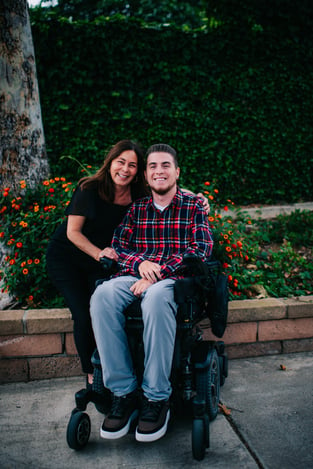
1. Building a Strong Caregiving Relationship
What does a good caregiver relationship look like to you?
Caregivers are a vital part of our lives. They assist with physical needs - ranging from bowel and bladder care to routine chores - but their contribution to our emotional well-being is even more significant.
A caregiver might be a friend—a sympathetic listener on a difficult day, or a companion for social gatherings. But if we have someone who is both caregiver and life partner, we are given a gift that adds new meaning and texture to our lives.
2. What Makes a Caregiving Partnership Thrive?
When you reflect on living with an injury for many years, what is one thing that has consistently made a caregiving partnership thrive?
In my 60 years of paralysis, the need for mutual love and respect have always been foremost — like the night I felt painful pressure in my chest. My wife helped me into the car. Halfway to the hospital, the pain stopped, but she refused to turn back. An angiogram located the blockage, and the surgeon gave me a choice — go home with a 50% chance of a fatal heart attack or have open heart surgery next morning. Thank God I chose surgery. My wife has been caring for me for 52 years now — cooking, cleaning, shopping, doing wound care, dressing changes, positioning me in bed, doing “taxi service” — all without pay. Only my heartfelt love and respect can fairly compensate her.
3. Caregiving and Independence
How has caregiving changed your understanding of independence?
In the interplay between a paralytic and caregiver, independence is a two-way street. To butcher a famous Beatles lyric, “The care you take is equal to the care you make.”
Early on in your paralysis, you are the center of everyone’s universe. Most evolve out of this. But it’s easy to fall into the mindset that the world is there to help you. This is called “learned helplessness.” Even if your caregiver is a saint, you overload them with tasks you can do and see growing resentment. This breaks the bond you both need to survive: mutual interdependency.
What I’ve learned after 60 years of marriage and 30 in a chair is simple: level the playing field. Take on tasks that have nothing to do with your injury. You will feel better and more independent living outside the confines of your condition. And your caregiver has more freedom and feels genuine respect.
4. Navigating the Challenges of Caregiving
How do you and your caregiver handle burnout or keep communication open and honest?
Communication and honesty are essential in managing the challenges of caregiving and preventing burnout. I think it is also important to express your needs and expectations upfront so everyone is on the same page from the very beginning. I do my best to always say thank you and express my appreciation for all the things my caregiver does for me. I have had many different caregivers over the years and recognize that caregiving can be physically and emotionally exhausting, so it is important to acknowledge when your caregiver may need a break. Patience, understanding, gratitude, and honest communication are important in helping me maintain a healthy relationship with my caregiver as a quadriplegic.
5. Advice for First-Time Caregivers
What’s one piece of advice you’d give to someone navigating caregiving for the first time?
I try really hard not to give advice as a matter of principle as everyone’s experience of caregiving is so vastly different; however, one lesson I always return to is that no one expects perfection; even in caregiving there is a learning curve. Learning to laugh at the mistakes, when they aren’t life threatening, of course, is what keeps us in the game of caregiving longer. One time I accidentally left one of Geoff’s wheelchair wheels in the driveway when we went on a trip; I learned that even strangers are willing to help with transfers when needed.
Caregiving looks different for every person and every partnership, but these reflections highlight the value of honest communication, mutual respect, and support. This National Family Caregivers Month, we’re grateful to the caregivers and care partners who are part of the Reeve community.
For caregiving information, guidance, and resources, visit ChristopherReeve.org/Caregiving.
Join Our Movement
What started as an idea has become a national movement. With your support, we can influence policy and inspire lasting change.
Become an Advocate