---
title: "It's Hot Out There: My Guide to Enjoying Summer with Paralysis"
description: Looking for ways to enjoy summer with paralysis? Discover adaptive sports, wheelchair-accessible beaches, day trips, heat safety tips, and more for staying active and hydrated.
image: https://blog.christopherreeve.org/hubfs/Kristin%20Beale%20FB.png
---
[Community](https://www.christopherreeve.org/community) [Voices from the Community](https://blog.christopherreeve.org/en) [It's Hot Out There: My Guide to Enjoying Summer with Paralysis](https://blog.christopherreeve.org/en/summer-tips-living-with-paralysis)
# It's Hot Out There: My Guide to Enjoying Summer with Paralysis
The coldest months of every year always have me dreaming — yearning — for summer: the warm afternoons, longer days, outside sports, and just simply rolling out the door without three layers on. My memory is selective, of course. I only ever seem to recall the good parts of summer, never the annoying ones (the sweat, the dehydration headaches, the daily showers).
Then summer actually arrives, and it all comes back — the good and the bad. This year, the summer hot showed up like a blast furnace, and I find myself wanting cooler days again.
We call that: impossible to please.
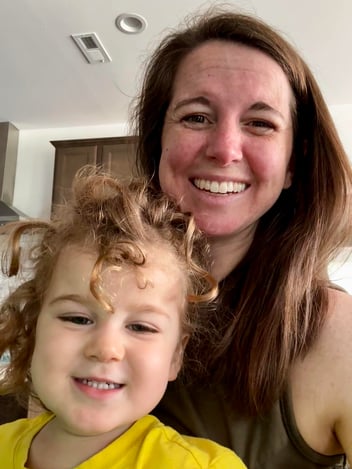I’m not at the point of looking forward to the snow, not even close, but I do acknowledge that a lot of days are just *too hot.* I have a few suggestions for enjoying summer, but keep in mind that the undercurrent of all of them is this: **drink water**. Ignore that advice, and you (plus your probable heat headache and pending [UTI](https://www.christopherreeve.org/todays-care/living-with-paralysis/health/secondary-conditions/bladder-management/) from not drinking) will melt into the pavement.
1. **[Day trips](https://www.christopherreeve.org/todays-care/living-with-paralysis/lifestyle/how-to-stay-healthy-on-the-road/).** As I write this, I’m planning a zoo trip with my son on a day with a high of 96 degrees. For some reason. It leans a little cuckoo, but it fits my own advice: *take a day trip.* Other easy wins include the museum, botanical gardens, or even just going out for ice cream.
2. **[Adaptive sports](https://www.christopherreeve.org/todays-care/living-with-paralysis/health/staying-active/).** This one sits close to my heart because I’ve gotten so much from sports post‑disability: community, an outlet, friends and, saving the best for last, medals. On those hot, too-hot days, a 20-minute ride is all I need for a good workout and just about all I can stand. It’s my favorite way to get out and get moving on warm summer days. Also consider kayaking, fishing, a neighborhood walk, or whatever fits your body and your bandwidth.
3. **Wheelchair‑friendly beaches.** I’ve been to a handful of wheelchair‑accessible beaches over the years and have ridden in every kind of beach wheelchair — from the humongous, rusted beasts to the slim, practical ones. That’s enough experience to make me deeply appreciate a solid boardwalk through the sand and a chair that doesn’t threaten a tetanus shot. But truly, they’re all fun, and the sand is a great change of terrain. If you’re able, give a beach wheelchair a try!
4. **Just go outside.** Obvious, yes, but still worth saying: go outside. Roll down the driveway, off‑road in the grass, sit on the porch, find a pool to splash in, or just close your eyes and feel the sunbeam. Time outside can be a workout, a playtime, or a full reset — whatever you need it to be.
5. **Or not.** Physical activity has its place, but so does lounging. Especially in the summer, some days are too hot to pretend otherwise. Enter: board games, movies with friends, porch hangs after the sun goes down or, heck, just looking out your window from the comfort of an air-conditioned house. No shame in it.
#### Join Our Movement
### What started as an idea has become a national movement. With your support, we can influence policy and inspire lasting change.
[Become an Advocate](https://www.votervoice.net/REEVE/Register)

I get it - summer is hot. Sometimes offensively so. But it’s also full of warm and beautiful moments if you step (or roll) into them. A zoo trip in 96 degrees, a handcycle ride that cooks you, a beach wheelchair adventure, or a porch sit that resets your whole nervous system — it all adds up. Get outside when you can, stay inside when you need to, and hydrate like it’s your job. My best advice is and will always be: drink your water, people.
### About the Author - Kristin Beale
Kristin Beale is a native of Richmond, Virginia. She is the author of three books, Greater Things and A Million Suns, Wide Awake, and a comic book, Date Me. Instagram: @kristin.gupta
[](https://twitter.com/kristinbeale) [](https://www.facebook.com/kristinbeale) [](http://www.linkedin.com/in/kristinbeale/)
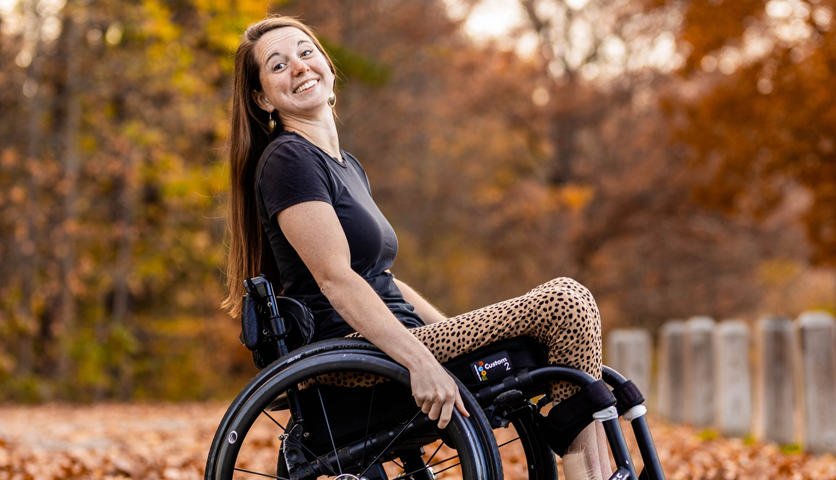
The opinions expressed in these blogs are the author's own and do not necessarily reflect the views of the Christopher & Dana Reeve Foundation.
The National Paralysis Resource Center website is supported by the Administration for Community Living (ACL), U.S. Department of Health and Human Services (HHS) as part of a financial assistance award totaling $10,000,000 with 100 percent funding by ACL/HHS. The contents are those of the author(s) and do not necessarily represent the official views of, nor an endorsement by, ACL/HHS, or the U.S. Government.
[Back to top](https://blog.christopherreeve.org/en/summer-tips-living-with-paralysis#top)