Peer & Family Support Program Spotlight: Tom Hoatlin
On the night he was shot, Tom Hoatlin was meant to be home. His six-month old daughter was sick, so he'd taken time off from the hotel he managed.
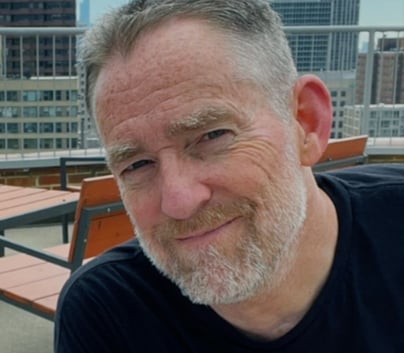 But when a colleague clocked out early, Hoatlin agreed to cover for a couple hours. Not long after he arrived, two men jumped across the front desk with a gun pointed and demanding cash – and the life he'd known forever shifted.
One minute he was crawling toward a telephone; the next, medics were treating a gunshot wound to his neck. After an emergency flight to the University of Michigan's Level I trauma center, Hoatlin woke up intubated and unable to feel his lower body. The bullet's path through his spine had caused a complete T2 injury.
“At first, I was angry that this happened – ‘How could this be true that I might never walk again?' – and then there were lots of tears,” he says, adding, “But the major silver lining is that I had the baby at home waiting for me.”
Adapting to the disability itself was, in some ways, the most straightforward part of his recovery.
After months of intensive physical and occupational therapy sessions, and one life-threatening pulmonary embolism that landed him in intensive care for six weeks, Hoatlin returned home, determined to resume a life interrupted. He raised his daughter, built a decades-long career as Director of Development at the Ann Arbor Center for Independent Living and became part of a robust local community of people living with paralysis.
But shedding the violence of the injury was a different story. More than three decades after the robbery, Hoatlin's nightmares – about being shot, about being in the wrong place at the wrong time – remain part of his life.
“I've had pretty substantial PTSD from the get-go,” he says.
Post traumatic stress disorder (PTSD), an intense physical and emotional condition that can develop after experiencing or witnessing traumatic events, affects many people living with spinal cord injuries, whether sustained through car accidents or acts of violence. While Hoatlin's rehabilitation program was comprehensive and filled with wide-ranging supports, the focus was, unsurprisingly, on his physical health and functional recovery.
“The PTSD is secondary because you don't see it,” he says. “No one sees it except for the victim. And I don't use that word lightly because I don't like it, but it's what we are. We are victims, but we're also survivors.”
Hoatlin wishes he'd been introduced to PTSD-focused resources immediately after his injury to begin to process the shooting and its aftermath. But he found a way to help fill the gap, for himself and others, through his longtime volunteer work as a peer mentor for the Michigan Spinal Cord Injury Model System (MI-SCIMS), housed within the University of Michigan's Center for Disability Health and Wellness, and the National Paralysis Resource Center Peer & Family Support Program.
Launched in 2011, the NPRC Peer & Family Support Program (PFSP) connects people living with paralysis with others in similar circumstances. The need for this support is both emotional and practical: people living with paralysis not only understand the singular challenges like no one else, they are often the best resource for the creative hacks and tips that make lives better. The program has not only been critical for thousands of families who have sought a peer mentor directly from the NPRC, but for patients at rehabilitation centers and hospitals across the country where the PFSP helps launch and coordinate on-site programs.
Hoatlin, who first became a peer mentor at the Ann Arbor Center for Independent Living (AACIL) shortly after he was discharged from rehabilitation, has mentored thousands of people living with SCI and their families and caregivers, including many who were injured by gunshot injuries. His goal, especially for those survivors sharing their own fears and struggles, is to first and foremost listen. Resist the urge to immediately relate with your own story. "It's not about the mentor," he says. "It's about the mentee."
“The first thing they need is to be heard by someone who truly understands where they're coming from,” he says. “I learned that both from being mentored and from mentoring others. Doctors, nurses, and therapists are all essential members of the care team, but mentors have a unique role. We can answer the questions people don't always ask in the clinic -- the practical, everyday questions about what life really looks like after injury. Mentees are like sponges. They're taking it all in, and they're hearing it differently because we've lived it. A mentor is the person who's been there, done that, and can answer absolutely anything honestly. Rehab doesn't end when you leave the hospital. In many ways, that's when it really begins.”
As awareness about PTSD-targeted treatments grows across the country, Hoatlin hopes people with new SCI injuries, especially those caused by armed violence, will realize that many resources – from therapy that gradually reduces the intensity of traumatic memories to one-on-one peer mentoring programs – are available to them.
“Mentoring has been therapeutic for me,” he says. “It's helped me cope over the years. And it's a two-way street: it's awin-win and a benefit for both the mentor and the mentee.”
Tom Hoatlin is a peer mentor for the Reeve Foundation's National Paralysis Resource Center Peer & Family Support Program. For more information, or to request a mentor, please visit ChristopherReeve.org/Peer
Visit our National Paralysis Resource Center for more information about living with SCI and paralysis, including our PTSD Fact Sheet: ChristopherReeve.org/factsheets
To learn more about spinal cord injuries, including those caused by acts of violence, visit the National Spinal Cord Injury Statistical Center at https://sites.uab.edu/nscisc/
Join Our Movement
What started as an idea has become a national movement. With your support, we can influence policy and inspire lasting change.
Become an Advocate